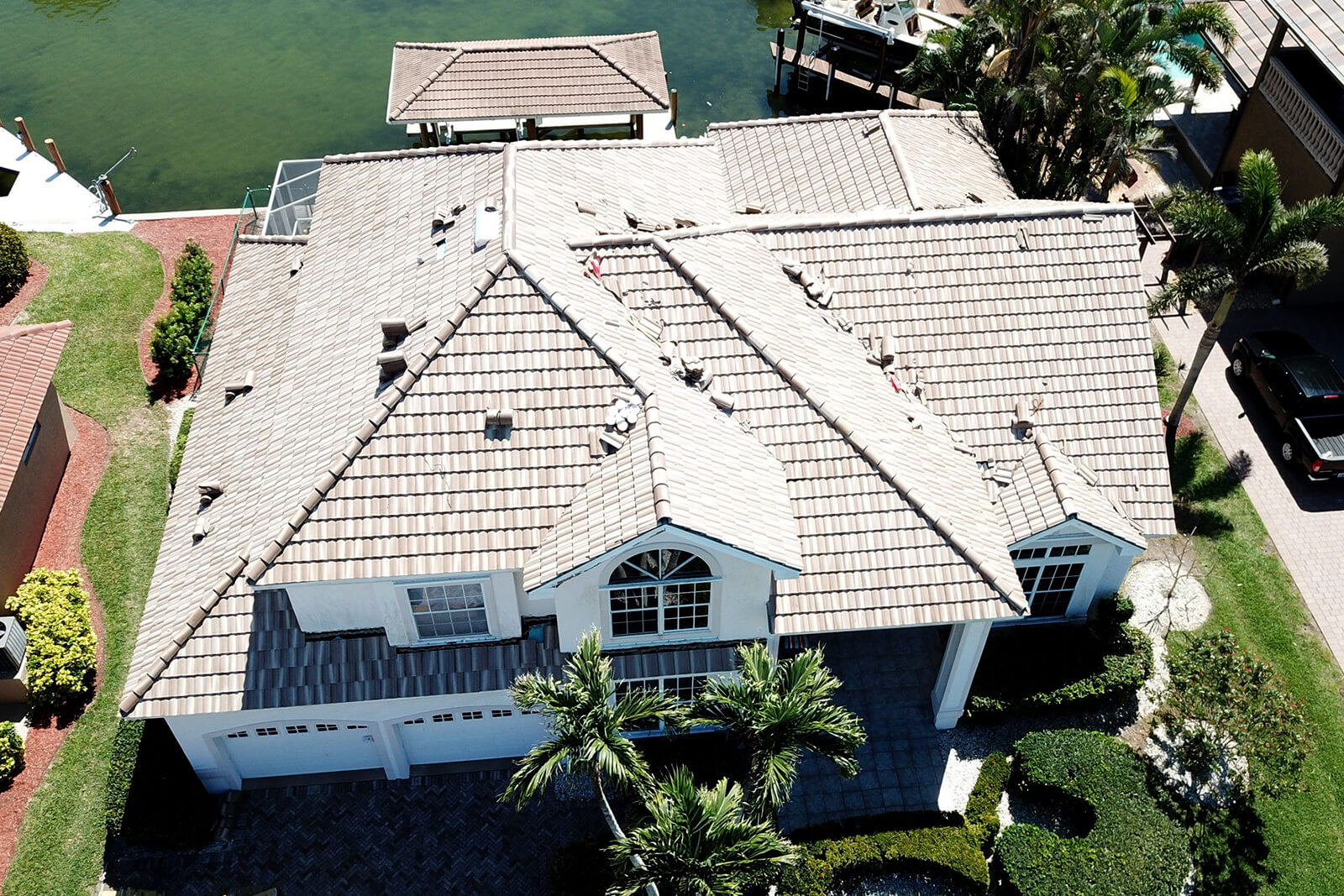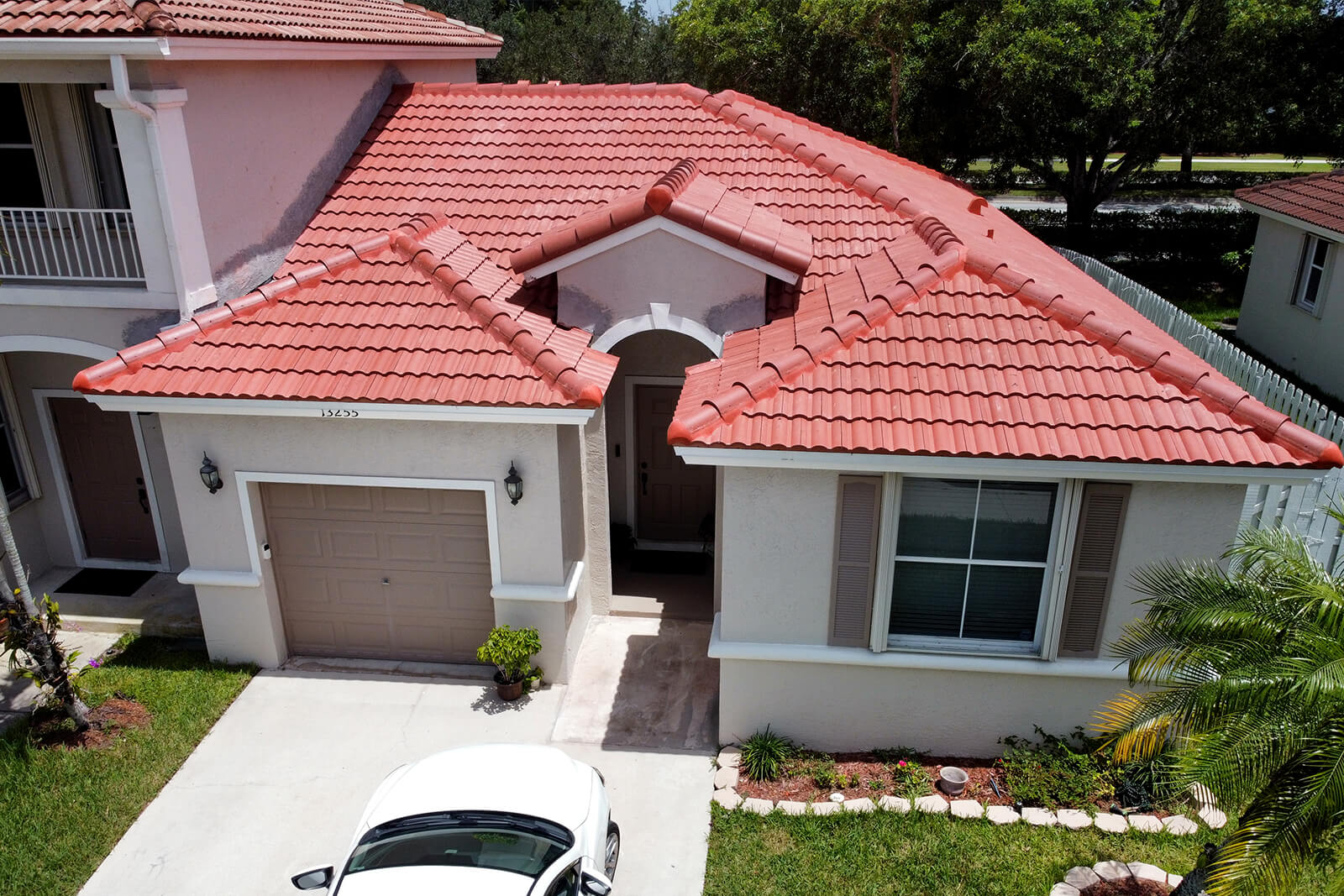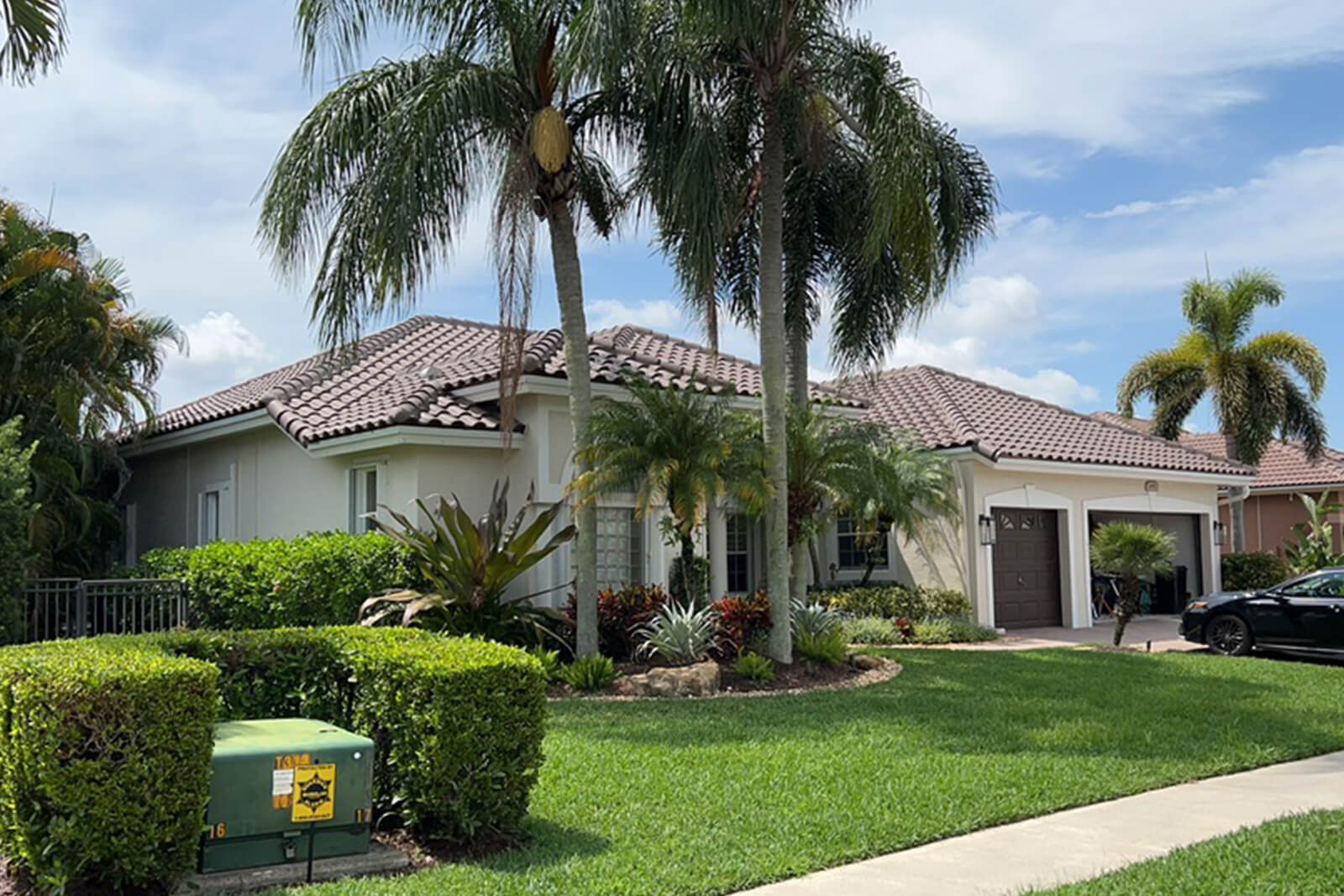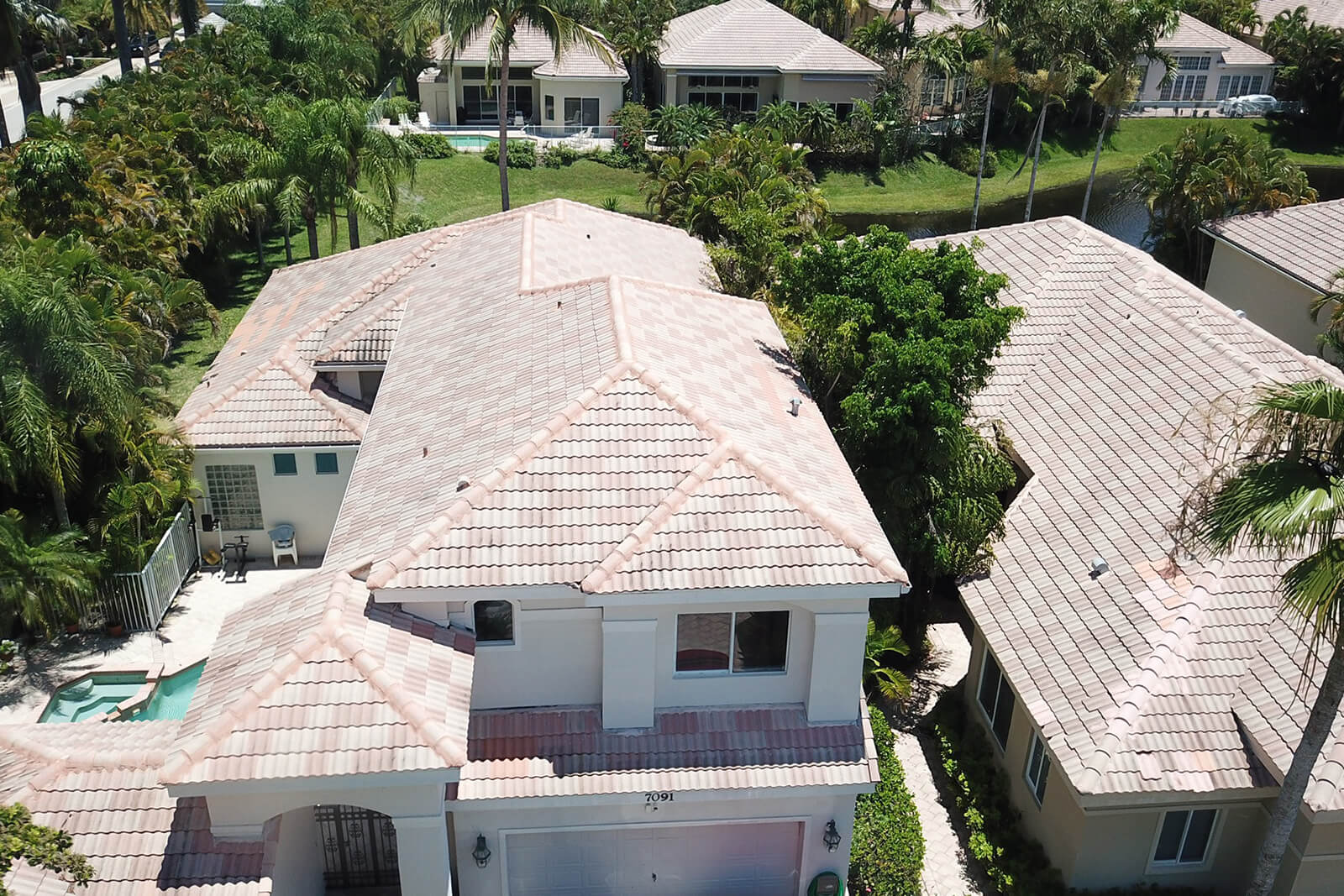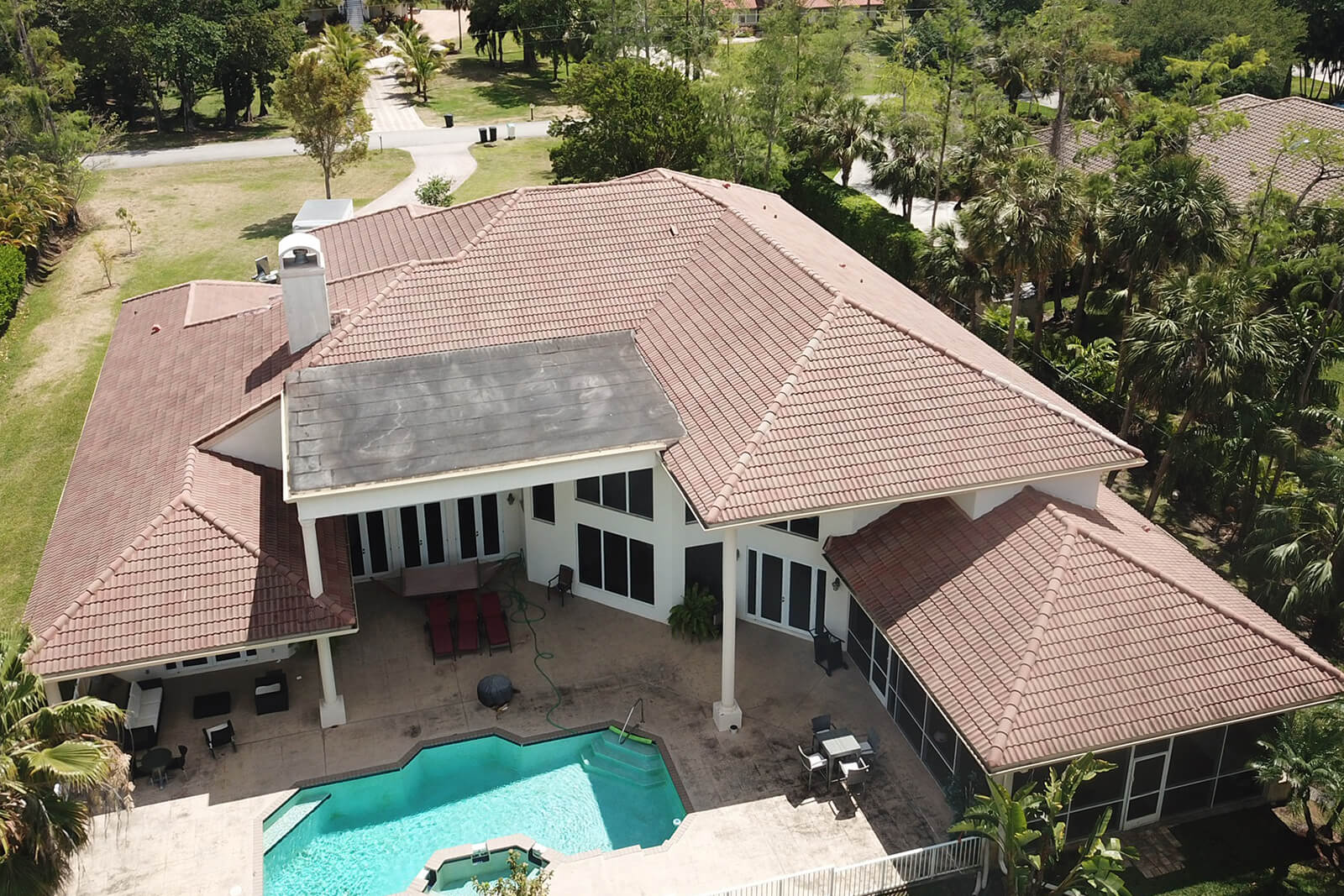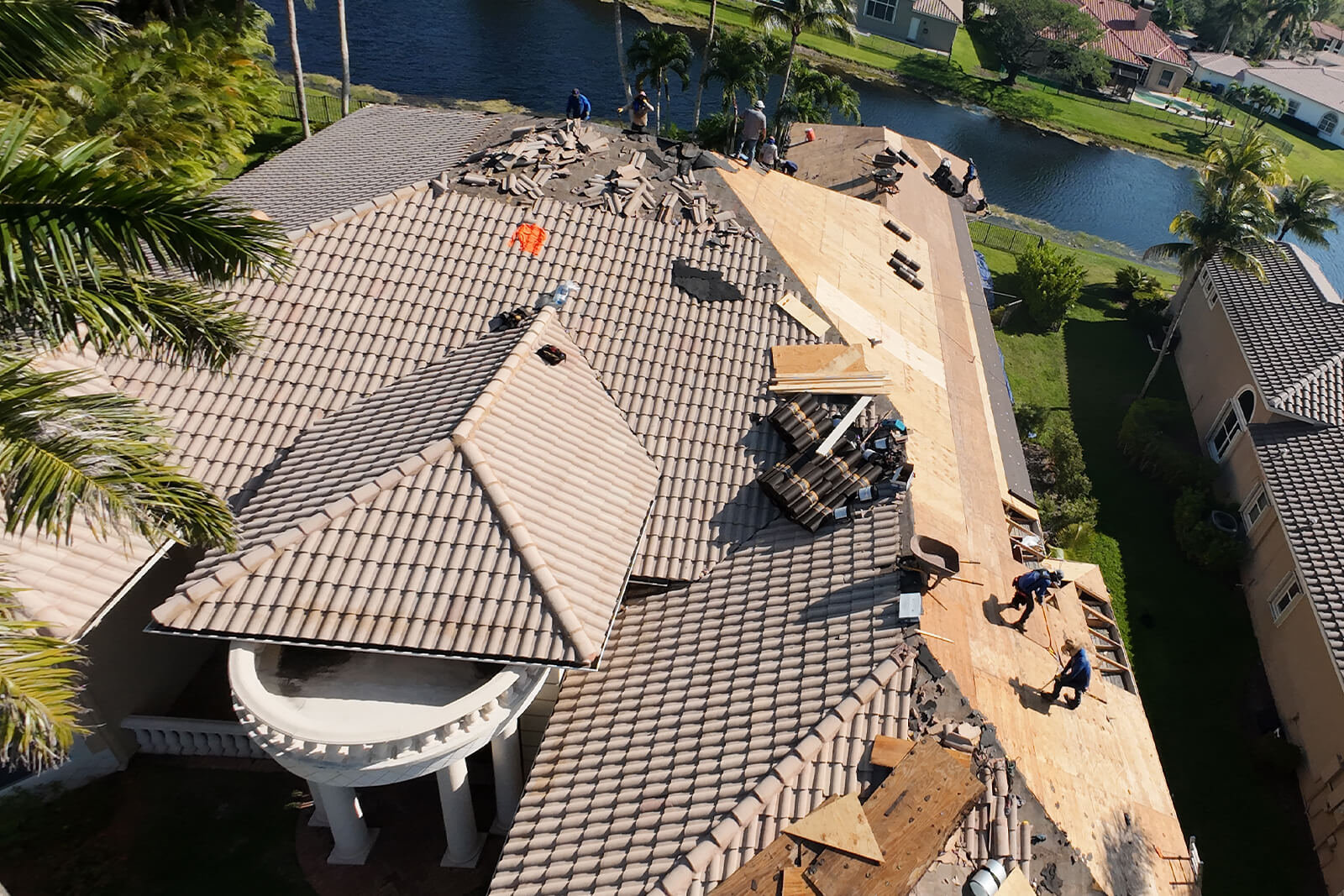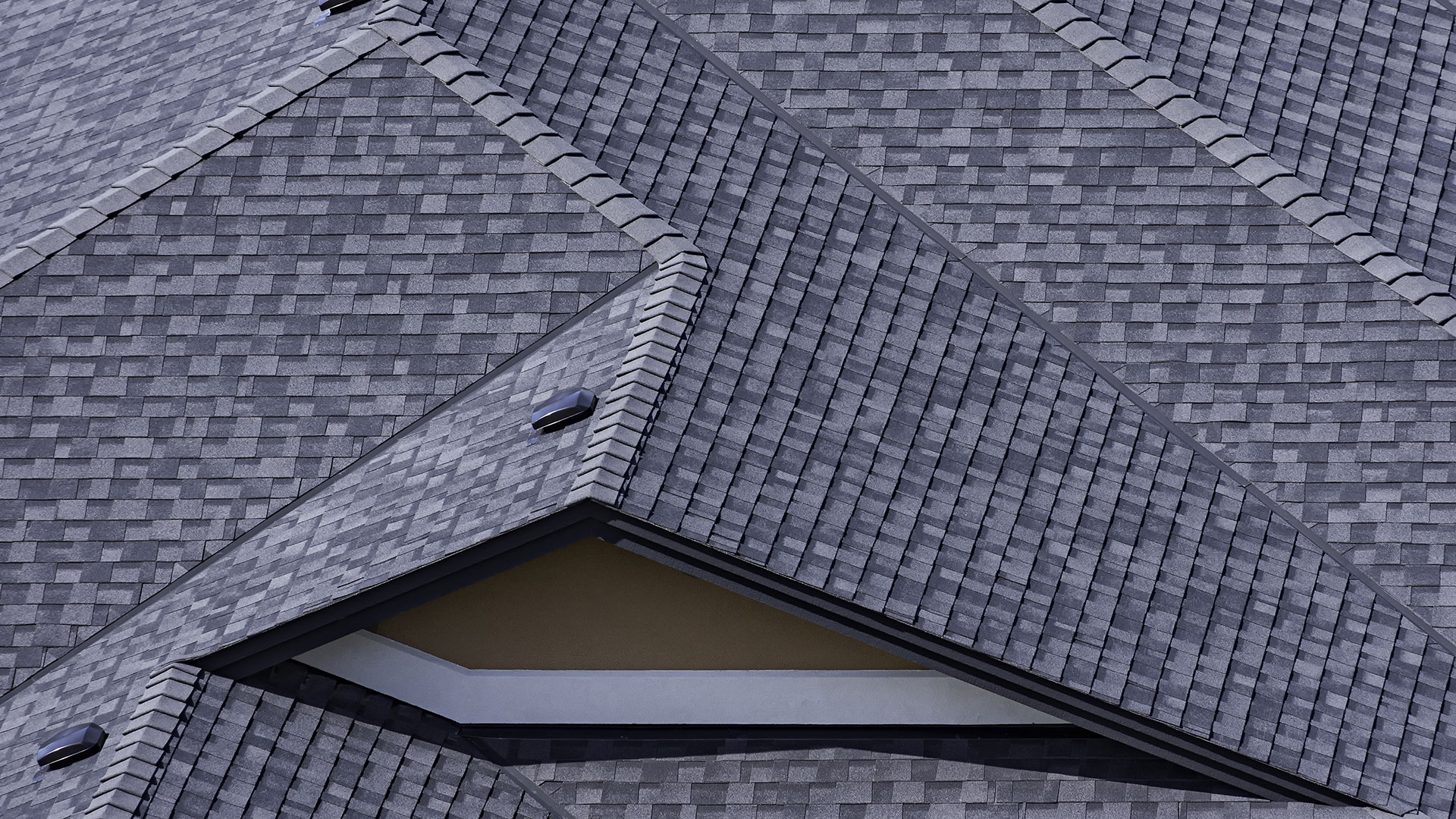
Algae and moss damage Florida roofs by degrading shingle integrity, trapping moisture against roof surfaces, and lifting shingle edges to allow water infiltration. Algae feeds on the limestone filler in asphalt shingles, reducing their reflective properties and increasing attic temperatures by 10-15°F, which drives up cooling costs. Moss causes more immediate structural damage, its root-like structures lifting shingle edges and creating gaps where water penetrates to the decking below. At Bentley Roofing, we’ve documented cases in Pompano Beach where untreated moss growth led to complete decking replacement within 18-24 months. This breaks down when your roof has metal or tile surfaces, which resist biological growth better than asphalt shingles, though moss can still establish itself in debris-filled valleys.
What Causes Algae and Moss Growth on South Florida Roofs?
Florida’s climate creates ideal conditions for biological roof growth. The combination of 70% annual rainfall concentrated between May and October, year-round humidity above 60%, and average temperatures between 75-90°F supports continuous algae and moss reproduction.
The dark streaks you see are Gloeocapsa magma, a cyanobacteria that colonizes asphalt shingles by consuming the limestone filler manufacturers use as a binding agent. This algae spreads through airborne spores that land on damp roof surfaces, typically on north-facing slopes or areas shaded by trees where morning dew evaporates slowly.
Moss follows algae growth because the algae creates a moisture-retaining layer on the shingle surface. Moss spores, also airborne, germinate in this damp environment and develop rhizoids, root-like structures that anchor into shingle granules and lift the shingle tabs. We see this pattern repeatedly in Pompano Beach neighborhoods within 3-5 miles of the coast, where salt air accelerates granule deterioration and creates more porous surfaces for moss attachment.
Organic debris accelerates the problem. Leaves, pine needles, and small branches collect in roof valleys and behind chimneys, holding moisture against the shingles for extended periods. This debris often carries moss and algae spores from nearby trees, essentially inoculating your roof with the organisms.
How Does Algae Reduce Your Roof’s Performance?
Algae growth compromises your roof’s thermal performance before it causes structural damage. The dark pigmentation in Gloeocapsa magma absorbs solar radiation instead of reflecting it, raising shingle surface temperatures and transferring that heat into your attic space.
In our thermal imaging inspections across Broward County, we’ve measured attic temperature differences of 12-18°F between algae-covered sections and clean sections of the same roof. This increased heat load forces your air conditioning system to work harder, increasing energy consumption by an estimated 10-15% during summer months. For a typical 2,000 square foot home, that translates to $30-50 per month in additional cooling costs.
The algae also degrades the asphalt binder in shingles. As it consumes limestone filler, it weakens the shingle matrix, accelerating granule loss and making the underlying asphalt layer more vulnerable to UV degradation. Shingles with heavy algae growth lose granules 2-3 times faster than clean shingles, shortening your roof’s effective lifespan.
At Bentley Roofing, we document algae coverage during our inspections because insurance adjusters now consider extensive algae growth when evaluating roof condition for claims. Under Florida Statute 627.7011, insurers can non-renew policies on roofs showing significant deterioration, and heavy algae staining often triggers closer scrutiny of overall roof condition.
Why Is Moss More Dangerous Than Algae?
Moss causes immediate structural damage through mechanical action. The rhizoids penetrate between shingle layers, lifting the bottom edge of upper shingles and creating gaps where wind-driven rain enters. Once water reaches the underlayment, it saturates the felt paper and begins deteriorating the plywood or OSB decking beneath.
We’ve responded to leak calls in Lighthouse Point and Deerfield Beach where homeowners ignored visible moss growth for 12-18 months, only to discover the underlying decking had developed soft spots requiring replacement of 200-400 square feet of sheathing. The repair cost jumped from a $800-1,200 moss removal and shingle replacement to a $4,000-6,500 structural repair because the moisture had time to rot the wood substrate.
Moss acts as a sponge, holding water against your roof surface long after rain stops. A one-square-foot moss patch can retain 2-3 pounds of water, keeping shingles in constant contact with moisture. This sustained wetness breaks down the asphalt binder and accelerates the freeze-thaw cycle damage that occurs even in South Florida during our occasional cold snaps.
The moisture moss retains also creates conditions for mold growth, both on the roof surface and in attic spaces if water has penetrated the decking. Mold spores travel through attic ventilation into living spaces, potentially triggering respiratory issues and allergic reactions in occupants.
How Should You Remove Algae and Moss From Your Roof?
Professional removal using low-pressure soft washing protects your shingles while eliminating growth. High-pressure washing strips protective granules from shingles, immediately voiding most manufacturer warranties and reducing remaining roof life by 5-7 years.
Our cleaning process at Bentley Roofing uses EPA-registered biocides applied at 100-150 PSI, roughly the pressure of a garden hose. The solution kills algae and moss at the root level without mechanical damage to shingles. For established moss growth, we carefully brush away the bulk before applying treatment, ensuring complete removal without lifting shingle tabs further.
The treatment leaves a residual barrier that prevents regrowth for 12-18 months in most cases. We schedule follow-up inspections to catch any new colonization early, before it establishes deep root structures.
Preventive installations provide longer-term protection. We install zinc or copper strips along roof ridges, which release metal ions during rain events. These ions are toxic to algae and moss, creating a 10-15 foot protected zone below the strip. For whole-roof protection on larger homes, we space multiple strips at intervals.
When replacement is necessary, we recommend algae-resistant shingles containing copper granules throughout the shingle body. As an Owens Corning Platinum Certified contractor, we install Duration® and Oakridge® lines with built-in StreakGuard™ protection, which carries a 10-year limited warranty against algae discoloration.
When Should You Call Bentley Roofing About Roof Growth?
Contact us immediately if you see any moss growth or algae covering more than 20% of visible roof surface. Moss indicates moisture has already compromised shingle adhesion, and delayed treatment increases the likelihood of hidden water damage requiring structural repairs.
Dark streaking alone warrants a professional inspection within 30-60 days. While less urgent than moss, algae accelerates shingle aging and often indicates drainage problems or inadequate attic ventilation that we need to address.
After any hurricane or tropical storm, schedule an inspection even if you see no obvious damage. High winds can deposit organic debris in roof valleys and damage flashing, creating ideal conditions for accelerated moss and algae establishment in the following weeks.
Our video roof inspections document current conditions and provide a baseline for tracking changes over time. We refuse to recommend unnecessary cleaning, but we also will not ignore early-stage growth that experience tells us will cause expensive damage if left untreated. For properties in Pompano Beach, Boca Raton, and Fort Lauderdale where salt air and humidity create constant biological pressure on roofs, annual inspections catch problems while they remain inexpensive to fix.
Contact Bentley Roofing at 954-979-2233 to schedule your inspection and protect your roof from costly moisture damage.