Most homeowners wait until they see a leak to call a roofer. In South Florida, that is often too late.
If you see missing shingles, granules piling up in gutters, interior water stains, sagging rooflines, or dents on vents, you need a professional inspection within 72 hours. The deciding factor is simple: Does the damage create a pathway for water?
Even a small breach, one lifted shingle or a cracked tile, will expand rapidly under our combination of intense UV heat and daily afternoon storms. If water can get in, the clock is ticking on wood rot and mold.
However, you do not need to panic if the damage is purely cosmetic (like minor discoloration) or if your roof is already scheduled for replacement.
Here is how to tell the difference between “ugly” and “urgent.”
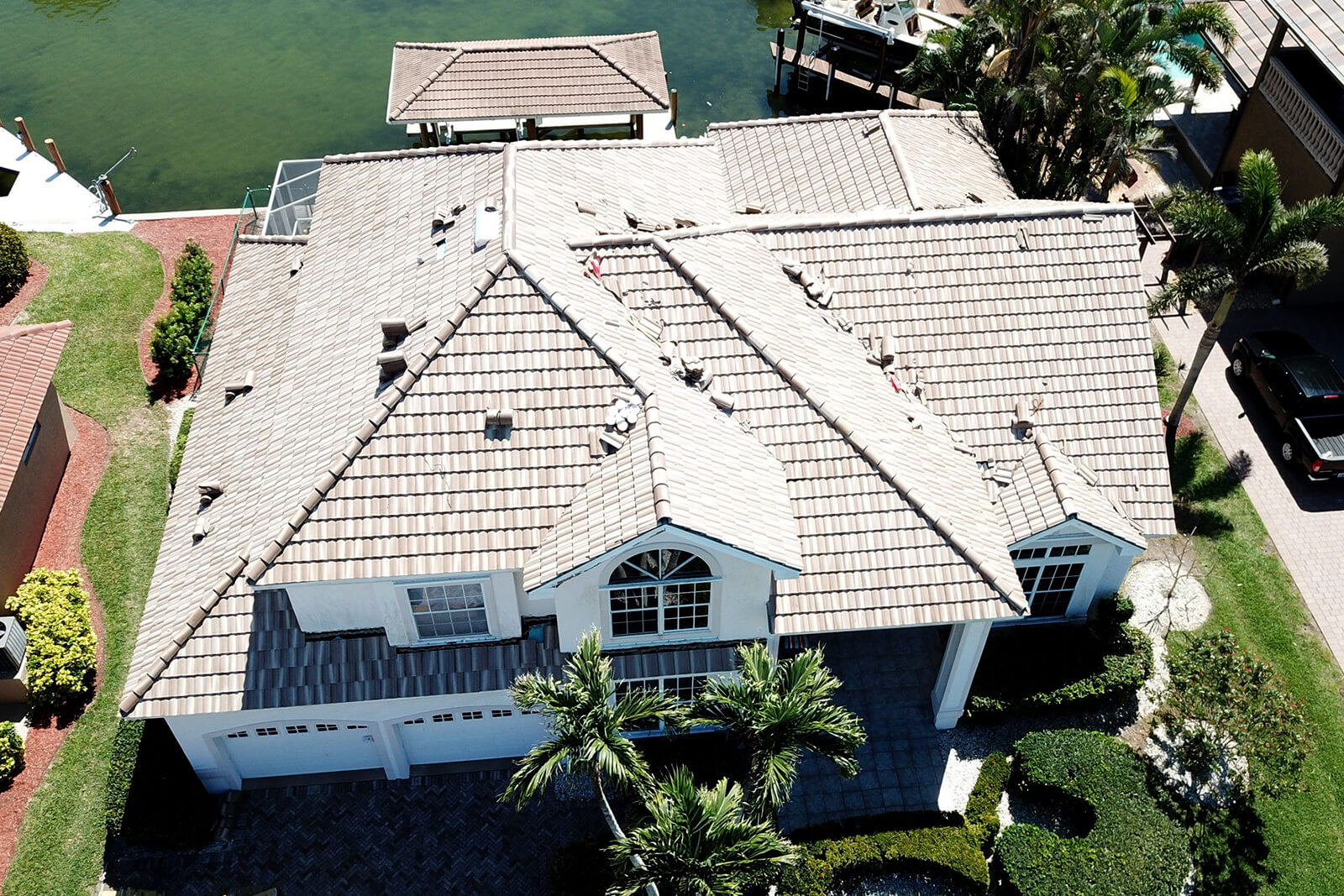
Sign 1: Missing, Cracked, or Curling Shingles
What do missing shingles mean for my roof?
They mean your primary defense is gone. Call Bentley Roofing immediately.
Shingles protect the underlayment, the waterproof barrier sitting on your wood deck. When shingles blow off, crack, or curl upward, that underlayment gets exposed to the sun. In Florida, UV rays can bake and brittle exposed underlayment in just a few weeks.
How to check:
Walk your yard and pool area. Finding shingles on the grass is the obvious sign. But also look up from the ground. If you see dark patches where shingles should be, or if the edges of the roof look “fluttered” or lifted, the wind seal has broken.
The specific risk:
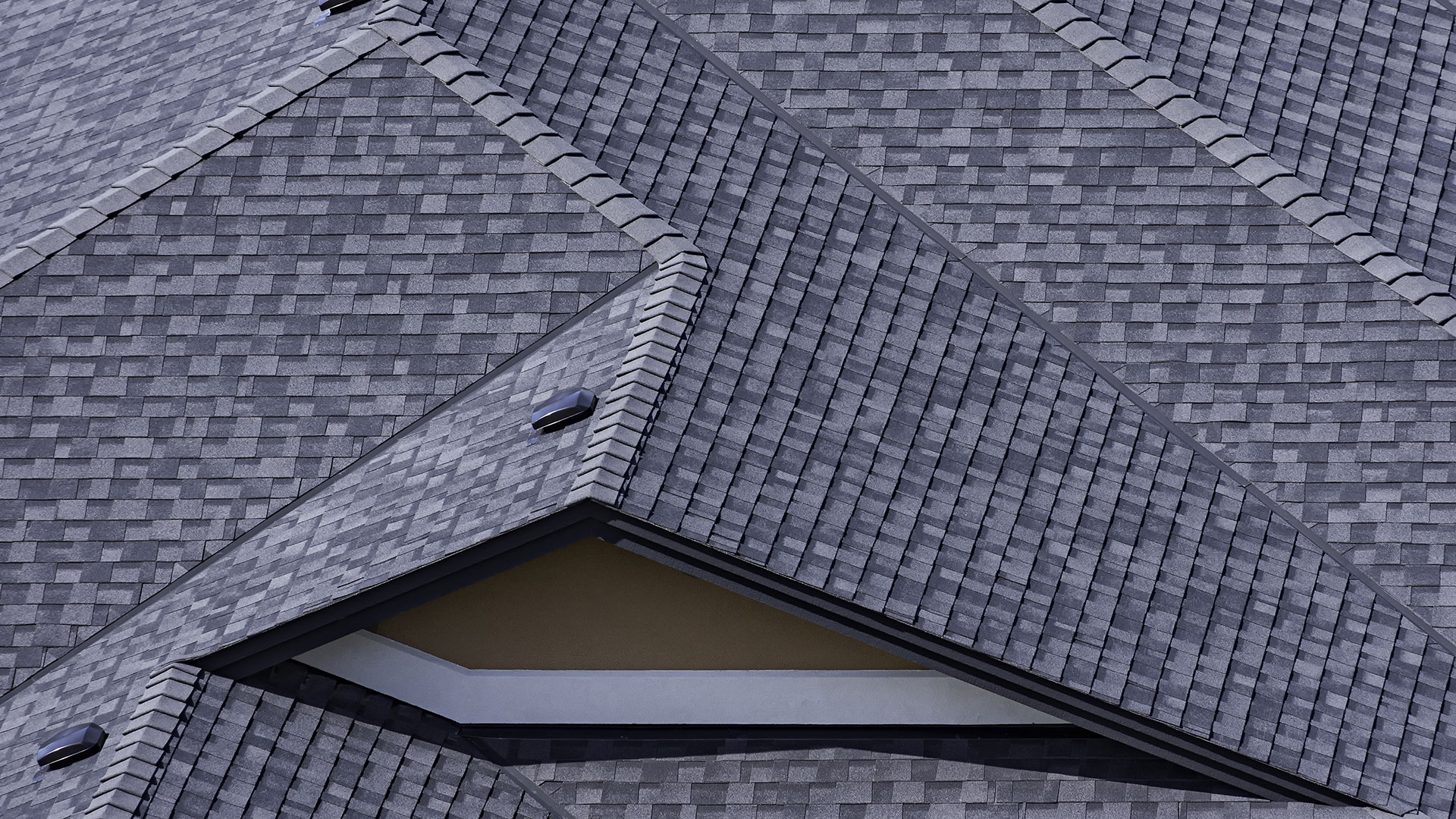
• Asphalt Shingles: Three or more damaged shingles in one spot usually imply wind stress that has loosened surrounding shingles you can’t see.
• Tile Roofs: Even one cracked tile is critical. Tiles work as a system; one break compromises the water-shedding ability of the whole section.
Sign 2: Granules Collecting in Gutters
Are granules in the gutters a bad sign?
Yes, if it looks like a pile of coffee grounds at the bottom of your downspout.
Asphalt shingles are coated in mineral granules to reflect the sun. When a storm strips these off, the asphalt underneath starts to cook. Without that protective layer, shingles deteriorate 3–5 times faster.
The Judgment Call:
• Normal: A light dusting of granules after a heavy rain is standard for roofs over 10 years old.
• Problematic: A thick layer (an inch deep or more) at downspout exits means the storm accelerated your roof’s aging significantly.
• Critical: If you look at your roof and see “bald spots” where the shingles look shiny or black, the granule loss is severe. Those shingles will fail within 6–18 months, even without another storm.
Sign 3: Water Stains on Ceilings or Walls
What does a ceiling stain mean after a hurricane?
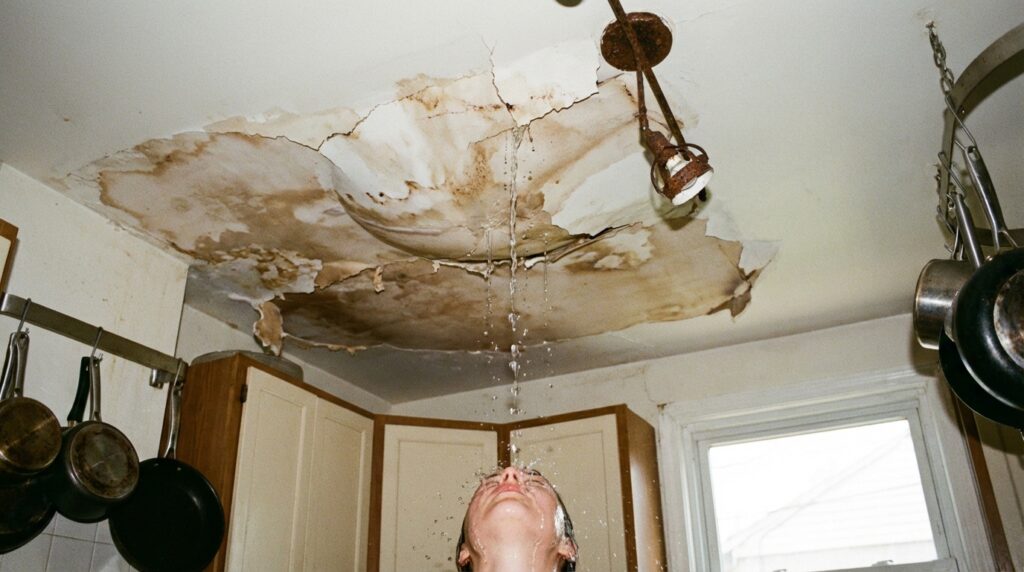
It means water has already traveled through your roof, insulation, and drywall. This is an active failure.
Do not wait to see if the stain gets bigger. By the time a brown or yellow ring appears on your ceiling, the water has likely pooled in the attic. In our humid climate, wet insulation breeds mold within 48 hours.
The “Intermittent Leak” Trap:
Sometimes a stain appears, dries out, and doesn’t come back for weeks. Do not ignore it. This usually means the leak is directional—it only lets water in when wind blows rain from a specific angle. The hole is still there, and it is rotting your decking quietly.
Sign 4: Sagging or Uneven Roof Lines
Is a sagging roof an emergency?
Yes. This is the only sign on this list that suggests structural collapse.
If you look at your roofline from the street and see a dip, wave, or swayback section, evacuate the upper floor and call a professional immediately.
Why it happens:
Sagging usually means one of two things:
- Long-term rot: Water has been getting in for months, turning your plywood decking into mush.
- Structural trauma: High winds have physically shifted or cracked the trusses/rafters.
Do not walk on a sagging roof. It is unsafe.
Sign 5: Dents on Metal Vents or Accessories
Do dents on roof vents require an inspection?
If the seal is broken, yes. If it’s just a dent, probably not.
Inspect the metal accessories: ridge vents, off-ridge vents, plumbing stacks, and AC units. Storm debris often hits these first.
• Cosmetic: A dent on the top of a vent cap is usually fine.
• Urgent: If the vent is dented and the base is lifted off the roof, or if the sealant around it is torn, water will pour directly into your attic.
For Metal Roofs:
Look for punctures or deep creases. Metal is durable, but once the coating is scratched or punctured, rust will start from the inside out. A small hole today is a rusted-out panel next season.
What to Do Next
If you spot any of these signs, move quickly. Florida insurance policies generally cover storm damage, but they require you to mitigate further damage (stop the bleeding) and file promptly—typically within 1–2 years of the storm.
- Document everything: Take photos from the ground. Photograph the debris, the shingles, and any interior stains. Use a reference object (like a coin or dollar bill) for scale.
- Call a licensed roofer: You need a professional opinion before you file a claim. At Bentley Roofing, we provide detailed attic assessments and photo reports so you know exactly what to tell your adjuster.
- File promptly: Waiting months makes it harder to prove the damage came from the storm and not general wear and tear.
When You Can Wait (Or Skip It)
Not every storm requires a frantic call. Here is when you can likely hold off:
• The roof is ancient: If your roof is 20+ years old and you are already planning a replacement, don’t waste money on a spot-repair inspection. Proceed with the replacement plan (but do document storm damage—it might help with the claim).
• Purely cosmetic: If the only issue is dirt, leaf stains, or minor color shifting, your roof is fine. Aesthetics don’t stop water.
• You are selling next week: If a buyer’s inspection is scheduled, let them find and document the damage. You will have to fix it anyway, but you don’t need to pay for a separate inspection first.
• Emergency Overload: Immediately after a Category 3+ hurricane, roofers are overwhelmed. If you don’t have water pouring in, tarp the damage if you can safely do so, and wait a week or two for the inspection. You won’t incur significant extra damage in that short window if the weather clears.
Disclaimer: This article is for informational purposes only and does not constitute professional advice. Roof work is dangerous; do not walk on a damaged roof. For an official assessment contact Bentley Roofing (FL License #CC1328148).